Artificial Intelligence & Machine Learning
Mathematical foundations, statistical learning, learning dynamics, and intelligent systems.
 Sapienza University of RomeFaculty of Information Engineering, Computer Science and Statistics · DIET

Neural Networks, Machine Learning, Artificial Intelligence, Intelligent Signal Processing
Full Professor of Electrical and Computer Engineering
Department of Information Engineering, Electronics and Telecommunications (DIET)
Sapienza University of Rome
My research and teaching activities lie at the intersection of artificial intelligence, neural networks, machine learning, deep learning, and advanced signal processing, with particular emphasis on mathematical foundations, learning algorithms, and their engineering applications.
Aurelio Uncini is a Full Professor of Electrical and Computer Engineering at the Department of Information Engineering, Electronics and Telecommunications (DIET), Sapienza University of Rome, Italy, where he founded and leads the Intelligent Signal Processing and Multimedia (ISPAMM) Laboratory. He is also a co-founder of the Research Center for Cyber Intelligence and Information Security (CIS) at Sapienza University.
His research and teaching activities lie at the intersection of Artificial Intelligence, Neural Networks, Machine Learning, Deep Learning, and Advanced Signal Processing, with particular emphasis on mathematical foundations, learning algorithms, and their engineering applications.
He received his Laurea degree in Electronic Engineering from the University of Ancona (now Marche Polytechnic University) in 1983 and his Ph.D. in Electrical Engineering from the University of Bologna in 1994. His early research activities included speech signal processing at the Italian National Research Council (CNR), O. M. Corbino Institute, in Rome (1982–1983), and artificial intelligence techniques for continuous speech recognition and understanding at the Ugo Bordoni Foundation (1984–1986).
From 1986 to 1998, he held research and academic positions at the Department of Electronics and Automatics of the University of Ancona. He joined Sapienza University of Rome as an Associate Professor in 1999 and became a Full Professor in 2005.
Prof. Uncini has authored or co-authored more than 300 scientific publications. His research over the past four decades has covered a broad range of theoretical, methodological, and applied topics, including:
His current research interests include advanced neural architectures, representation learning, generative AI, and the integration of model-based and data-driven approaches for intelligent signal processing.
He is the author of several academic books, including:
Prof. Uncini has been actively involved in the international neural network, machine learning, and signal processing communities. Among his major scientific leadership roles, he has served as:
He has also served on IEEE technical committees in Machine Learning for Signal Processing and Blind Signal Processing, as well as on the Steering Committee of the Italian Neural Network Society (SIREN). His professional affiliations have included IEEE, the International Neural Networks Society (INNS), and the Audio Engineering Society (AES).
Throughout his academic career, his scientific activity has pursued a unifying perspective: combining mathematical rigor, computational methods, and engineering principles to develop learning systems capable of modeling, processing, and interpreting complex real-world information.
Scientific foundations, emerging technologies, and engineering applications.
Mathematical foundations, statistical learning, learning dynamics, and intelligent systems.
Deep architectures, spline-based neural models, representation learning, and generative modeling.
Nonlinear adaptive systems, blind source separation, audio, acoustics, and multimodal information processing.
Inverse problems, computational methods, and model-based and data-driven approaches.
Foundation models, agentic AI, and the integration of learning and model-based reasoning.
Scientific perspectives on emerging AI methods, technological innovation, and their implications for industry and society.
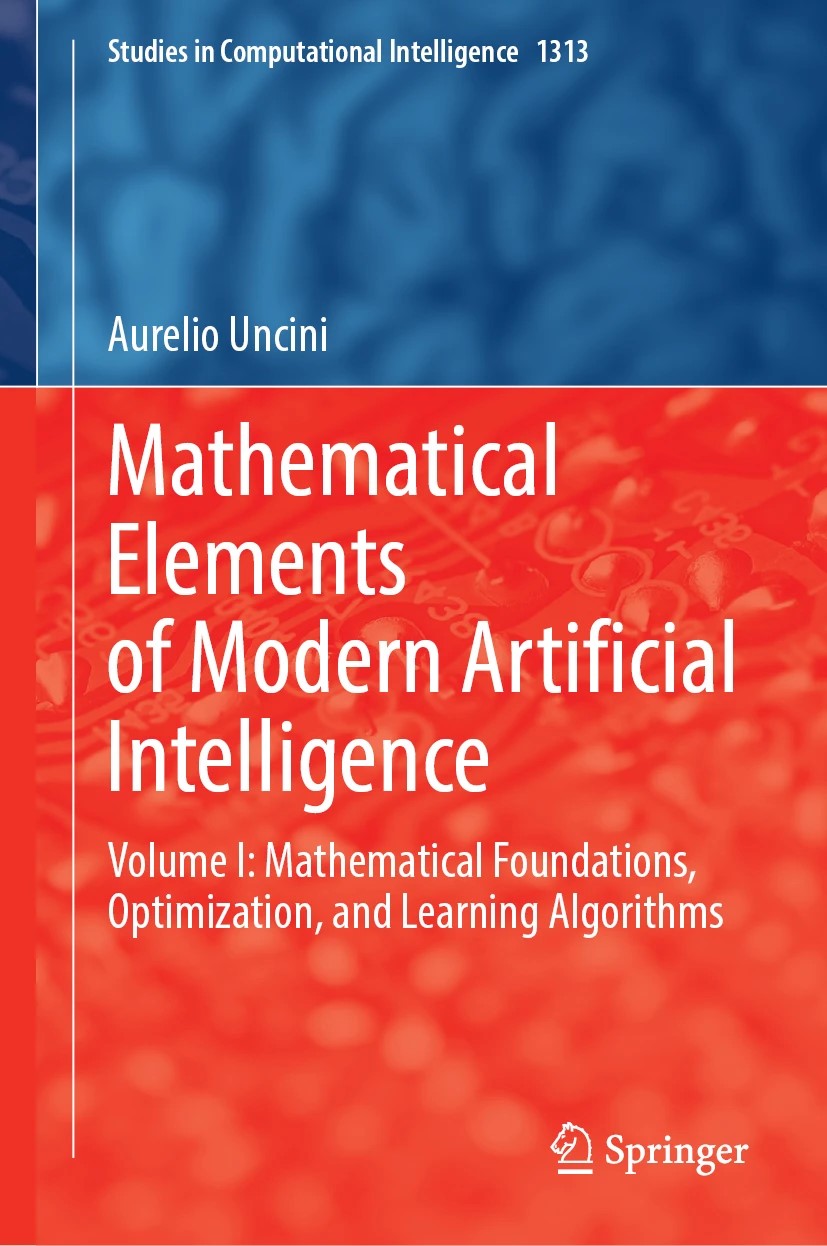 Mathematical Elements of Modern Artificial Intelligence — Volume I
Mathematical Foundations, Optimization, and Learning Algorithms
Springer · Studies in Computational Intelligence · Expected 2027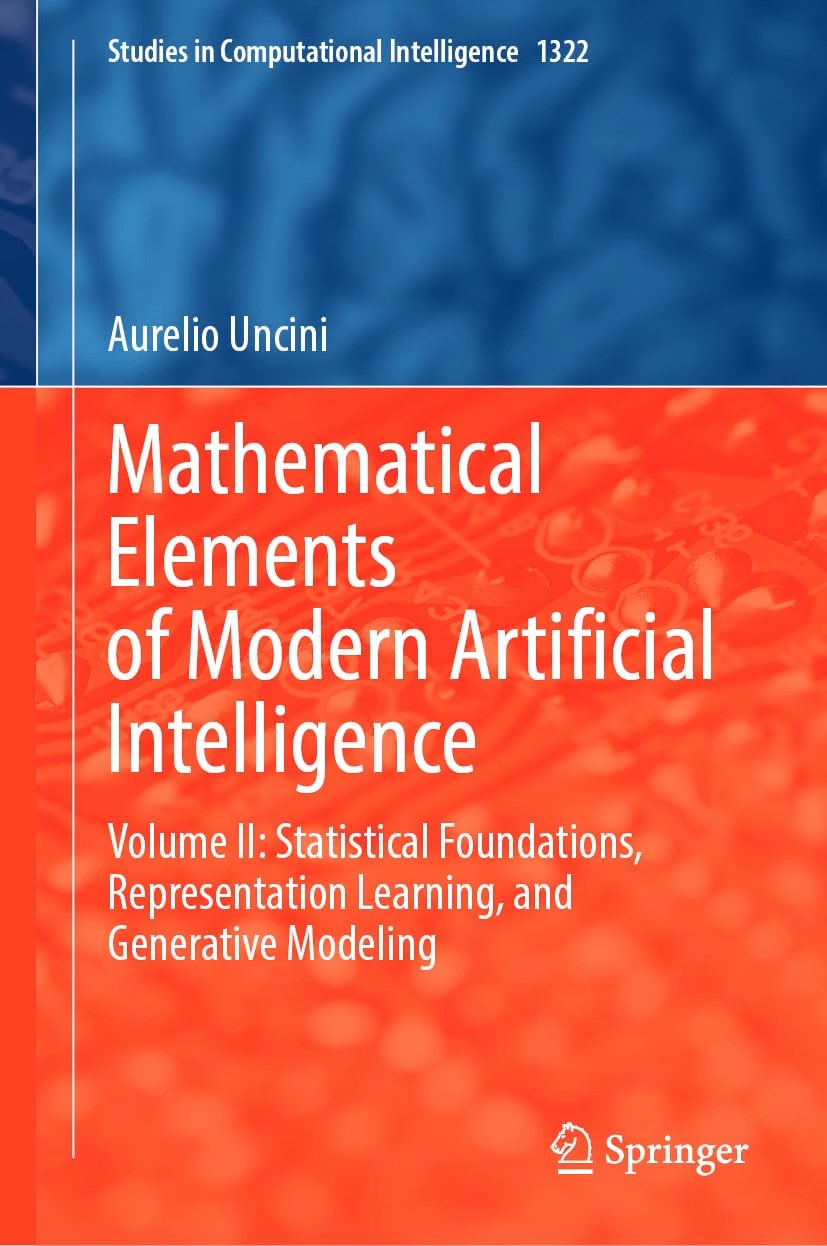 Mathematical Elements of Modern Artificial Intelligence — Volume II
Statistical Foundations, Representation Learning, and Generative Modeling
Springer · Studies in Computational Intelligence · Expected 2027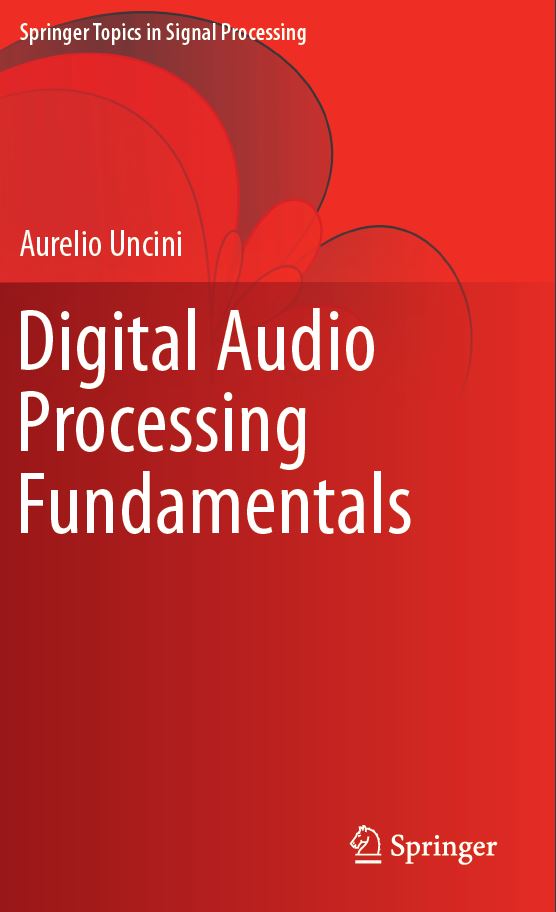 Digital Audio Processing Fundamentals
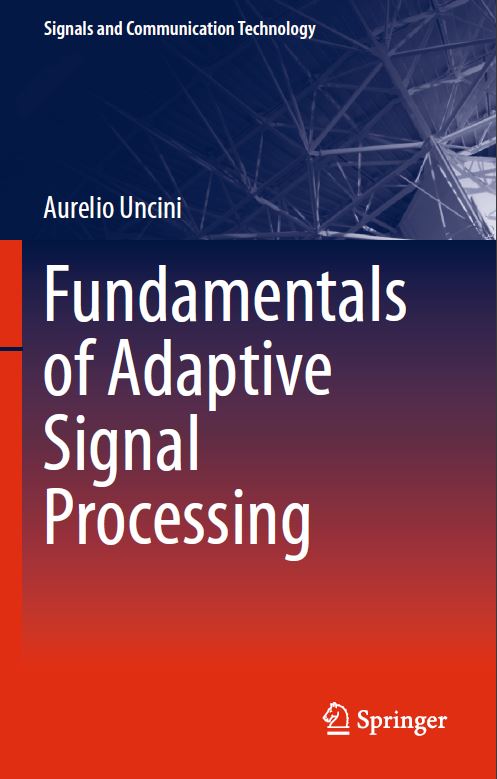 Fundamentals of Adaptive Signal Processing
 Audio Digitale
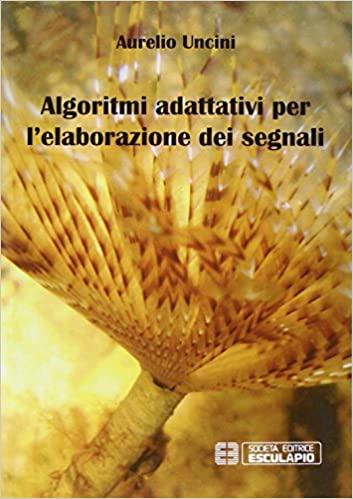 Algoritmi Adattativi per l’Elaborazione dei Segnali
Intelligent Acoustic Signal Processing: Physical Foundations, Adaptive Systems, and Spatial Audio — work in progress.
Introduction to Neural Networks and Deep Learning — free student edition, 705 pages.
Master's Degree Programmes · Sapienza University of Rome
Mathematical foundations, optimization and statistical learning
Neural architectures, representation learning and generative modeling
Audio signal processing and artificial intelligence